
Aging well is not simply about adding more years to your life. It is about preserving the physical capacity to enjoy those years—to walk without pain, carry groceries, climb stairs, play with your grandchildren, travel, and get out of a chair without struggling.
Exercise is one of the most powerful tools for maintaining that independence. While some physical decline is a normal part of aging, becoming weaker, stiffer, less coordinated, and increasingly sedentary is not inevitable. The right combination of exercise can help preserve muscle, maintain cardiovascular fitness, support joint function, and keep balance and coordination sharp.
The objective is not to pursue extreme athletic performance. It is to build a body that remains capable and resilient for decades. That requires attention to four essential pillars: strength, mobility, cardiovascular endurance, and balance.
1. Strength Training
Muscle is fundamental to independence. As we age, muscle mass and strength tend to decline, and inactivity can accelerate that process. Losing strength makes everyday activities progressively harder and increases vulnerability to falls, injury, and loss of independence.
Resistance training provides a direct way to counter this decline. Weightlifting, resistance bands, machines, and bodyweight exercises such as squats, lunges, rows, and push-ups can all be effective.
Strength training also does more than build muscle. It supports bone health, improves posture, helps stabilize joints, and increases the physical reserve needed to handle unexpected demands.
For many adults, two to three well-designed resistance-training sessions per week can provide substantial benefits. The goal is progressive, consistent training—not exhausting yourself every time you exercise.
2. Mobility
Being flexible is not the same as being mobile.
Mobility is the ability to actively control your body through useful ranges of motion. It allows you to squat, reach overhead, rotate, bend, and move freely while maintaining strength and control.
Regular mobility work can include dynamic stretching, controlled joint movements, yoga, and targeted exercises for areas that have become restricted through inactivity or repetitive movement.
Good mobility makes everyday movement easier and can help maintain the physical freedom required for activities ranging from putting on your shoes to getting into a car or reaching something on a high shelf.
The important distinction is that mobility should complement strength rather than replace it. A joint needs both usable range of motion and the strength to control that range.
3. Cardiovascular Endurance
Strength allows you to produce force. Cardiovascular fitness determines how well you can sustain activity.
A healthy cardiovascular system makes daily life less tiring and supports the ability to walk, climb stairs, travel, exercise, and participate in recreational activities without becoming unnecessarily fatigued.
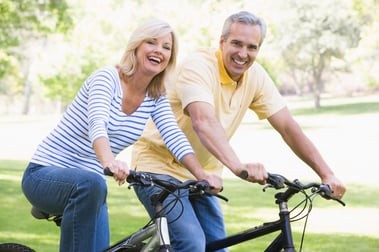
Walking, cycling, swimming, rowing, hiking, and other aerobic activities can improve cardiovascular fitness. Regular aerobic exercise also supports metabolic health and is associated with lower risk of several chronic diseases.
Consistency matters more than occasional heroic workouts. Regular moderate activity can build a strong aerobic foundation, while appropriately dosed higher-intensity work can provide additional benefits for people who are capable of performing it safely.
4. Balance and Coordination
Strength and cardiovascular fitness are important, but they are not enough if you cannot control your body effectively.
Balance and coordination become increasingly important with age because falls can have serious consequences. Balance training helps develop the ability to stabilize the body, shift weight effectively, and respond to unexpected changes in position.
Single-leg exercises, controlled step-ups, tai chi, and other stability drills can challenge balance and coordination. These exercises also train the nervous system to communicate more effectively with the muscles responsible for maintaining stability.
Balance should not be treated as something to address only after it deteriorates. Like strength and endurance, it is a physical capacity worth training proactively.
Consistency Is the Real Longevity Strategy
The most effective exercise program is not necessarily the most intense one. It is the one you can perform consistently for years.
Exercise should create enough stimulus to drive adaptation without creating so much fatigue, pain, or injury that you cannot sustain it. A short walk, a few sets of resistance exercises, or several minutes of mobility work may seem insignificant in isolation. Repeated thousands of times, however, these small actions can produce a profound difference in physical capacity.
There is also an important mindset shift: exercise should not be viewed solely as a way to prevent decline. It is a way to build and maintain capacity.
The objective is to enter each decade with enough strength, mobility, endurance, and coordination to handle the demands of the next one. That means training not merely for how you feel today, but for the physical freedom you want to retain years from now.
Aging is inevitable. Becoming unnecessarily frail is not.
Independence is supported by the physical capabilities you build and maintain throughout life. The earlier you treat movement as an investment rather than a chore, the greater your chances of remaining strong, capable, and confident as you age.