
Are you thinking about making the transition to direct primary care? Here's what you should know before making the leap.
Primary care is crucial for building a strong healthcare system that ensures positive health outcomes, effectiveness, efficiency, and equity. It is the first contact in the healthcare system for individuals and aims to provide the patient with a broad spectrum of preventive and curative care over a period of time. It provides individual, family and community-oriented care for preventing, curing or relieving common illnesses, disabilities, and promoting overall health wellness.
Cholene Rajauski didn't carry a stopwatch when she went to see her primary care physician for a sore throat, but she is certain the physician was not in the exam room with her for more than four minutes.
You call your doctor's office for an appointment and are told it'll be about 3 weeks. You arrive on time only to sit in the waiting room for 30 minutes. Finally you get to see your primary care doctor and you begin to explain why you came in. The doctor asks a few questions, does a brief exam, gives you a prescription, suggests you see the specialist and within 10 minutes, you're out the door. No time for delving deeply into your issues. No time to build trust. No time for compassion. No time for actual healing.
In an article posted by The Washington Post, we learn that residents of some of the country’s most prominent cities are experiencing prolonged wait times when they try to schedule an appointment with their physician. The study found that out of the 15 cities researched, 12 of them had patient wait times of 14 days or longer. The article's principal point is that "the average wait time for a new patient to see a physician in five medical specialties is 18.5 days." This means that someone identified a concern they have about their health and then had to wait more than two weeks to get answers.
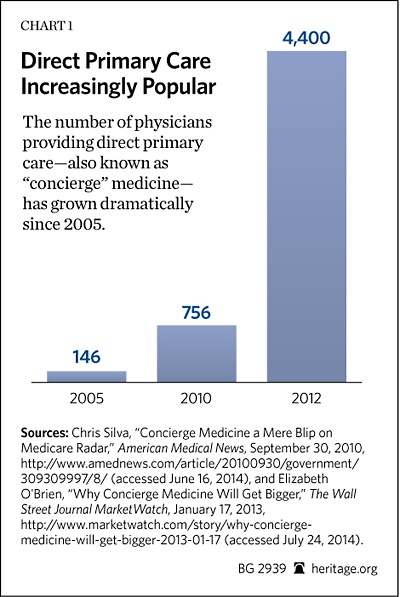
Direct primary care is when individuals or employers pay directly for primary care. Because of this form of direct care, excessive overhead, prior authorizations, billing, extra office space, and unnecessary staff is removed from the business equation. The savings attained are passed on to the patients in the form of lower fees. Doctors are less dependent on third party payers, and end up working in the best interests of patients, not insurance companies.
If you're like most Americans, you have to wait at least 20 minutes in the waiting room before you see your doctor. This wait time has become a serious frustration for many people and it has led to the rise of other forms of primary care such as direct primary care and concierge medicine.
You call your doctor's office and schedule an appointment. How long do you have to wait? When you consider how important timing can be for catching and preventing certain illnesses, a long wait time is especially nerve-wracking. But, that seems to be the most common past time for ailing Americans. In some cities across the U.S., patients have to wait between three to six weeks just to see their primary care doctor.
"When you have health insurance, you are already paying twice. The first time you pay is when you pay your premiums, and the second time is when you pay anything in addition to those premiums, like co-pays, prescriptions, etc. Direct Primary Care is a way to decrease how much you shell out for the second payment, while providing high-quality, easily accessible primary care." - Rich Stamps, President & CEO
Copyright © 2026 Total Access Medical, All Rights Reserved.
Built by Bumblebee Media
Disclaimer | Privacy Policy